Pooling water near the foundation
Low spots, flat grading, or flowerbeds that slope toward the house let rain sit against the slab. Repeated soaking softens and swells the soil right where your foundation needs it most stable.
Family-owned since 1999 · Serving Texas
Services
Water is one of the biggest drivers of foundation movement in Texas. Clay soil that stays soaked along one side of a house and dry along another expands unevenly, and that uneven movement is exactly what foundations struggle with. Good drainage is one of the most practical ways to protect the structure you live in.
We look at where water lands, where it flows, and where it collects. Then we recommend the simplest combination of gutters, downspout routing, and yard drainage that gets it moving away from your home. Drainage work pairs naturally with foundation and concrete repairs, and on its own it can help reduce future problems.
Problems
Low spots, flat grading, or flowerbeds that slope toward the house let rain sit against the slab. Repeated soaking softens and swells the soil right where your foundation needs it most stable.
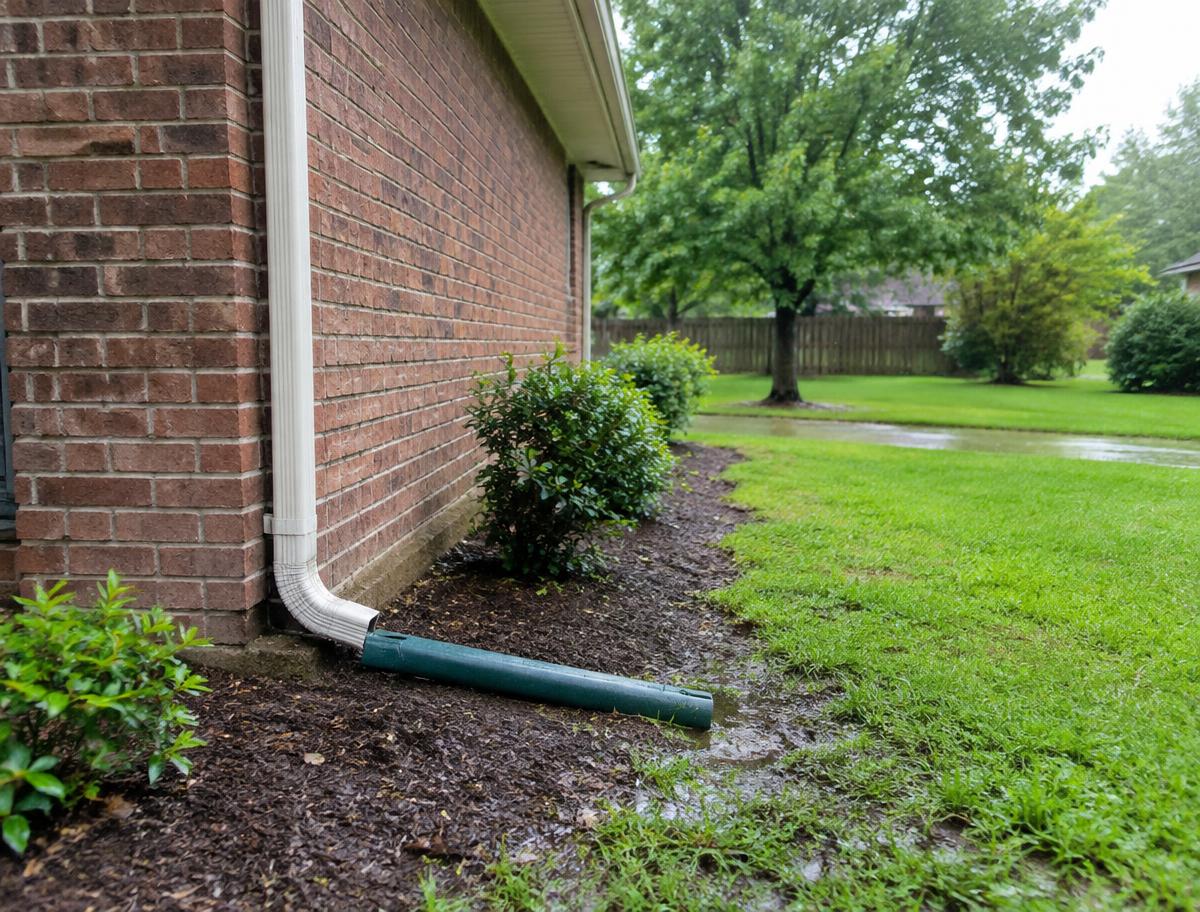
Without gutters — or with gutters that are clogged, undersized, or poorly pitched — roof runoff pours straight down along the perimeter. That concentrated water can erode beds, splash siding, and saturate the soil beside the foundation.
Fast-moving water carries soil with it. Washouts under sidewalks, exposed foundation edges, and channels cut through the yard are signs that water needs a better path.
Solutions
A French drain collects water in a gravel trench with perforated pipe and carries it to a safer discharge point. Surface drains capture runoff at low spots before it can sit against the house.
Extending or burying downspout lines moves roof water away from the foundation instead of dumping it at the corners of the house — often one of the most cost-effective drainage improvements.
Properly sized and pitched gutters collect roof runoff and deliver it to downspouts you can control. We plan gutter layout together with where that water will be discharged.
Warning signs
Any one of these can have a simple explanation. Several together, or signs that are getting worse, are worth a closer look.
Our process
We trace how water moves across your roof, gutters, and yard and note where it collects.
We recommend where gutters, downspout lines, or drains should go and include it in your free estimate.
Our crew installs the planned drainage components and restores disturbed areas.
We confirm water is reaching the planned discharge points and explain any simple maintenance.
FAQ
Free estimate
Share your details and we'll reach out to schedule an on-site visit.
Related services
Areas we serve
Our four Austin offices serve the city and surrounding communities.
Pricing
Book a defined flat-rate service, or arrange a free estimate for measured and quote-only work.
Flat rate — price confirmed before work
Extensions carry roof runoff farther from the foundation. The number and placement depend on the existing downspouts and drainage around the property.
Explore this service Book this servicePriced per linear foot — set at your free inspection
Drainage lines move collected water away from problem areas. Linear footage is measured for the proposed route.
Explore this service Book a free estimatePriced per linear foot, plus per downspout — set at your free inspection
Gutters collect roof runoff and downspouts direct it away from the home. Pricing accounts for gutter footage and the downspouts needed.
Explore this service Book a free estimateFree on-site estimate
Wall layout, drainage and fill needs depend on the slope and site conditions. We inspect the property before preparing an estimate.
Explore this service Book a free estimateFree on-site estimates from a family-owned Texas company.